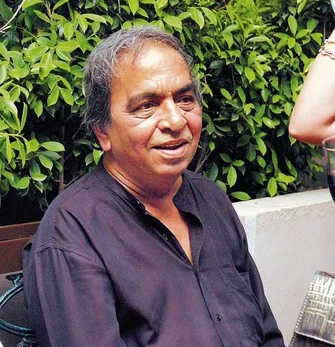
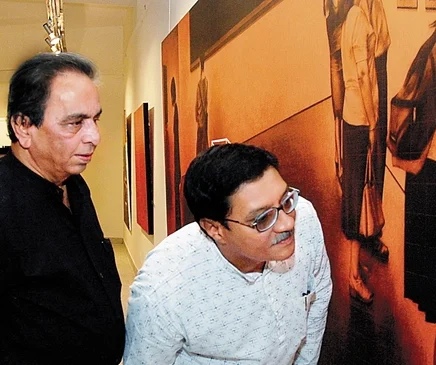
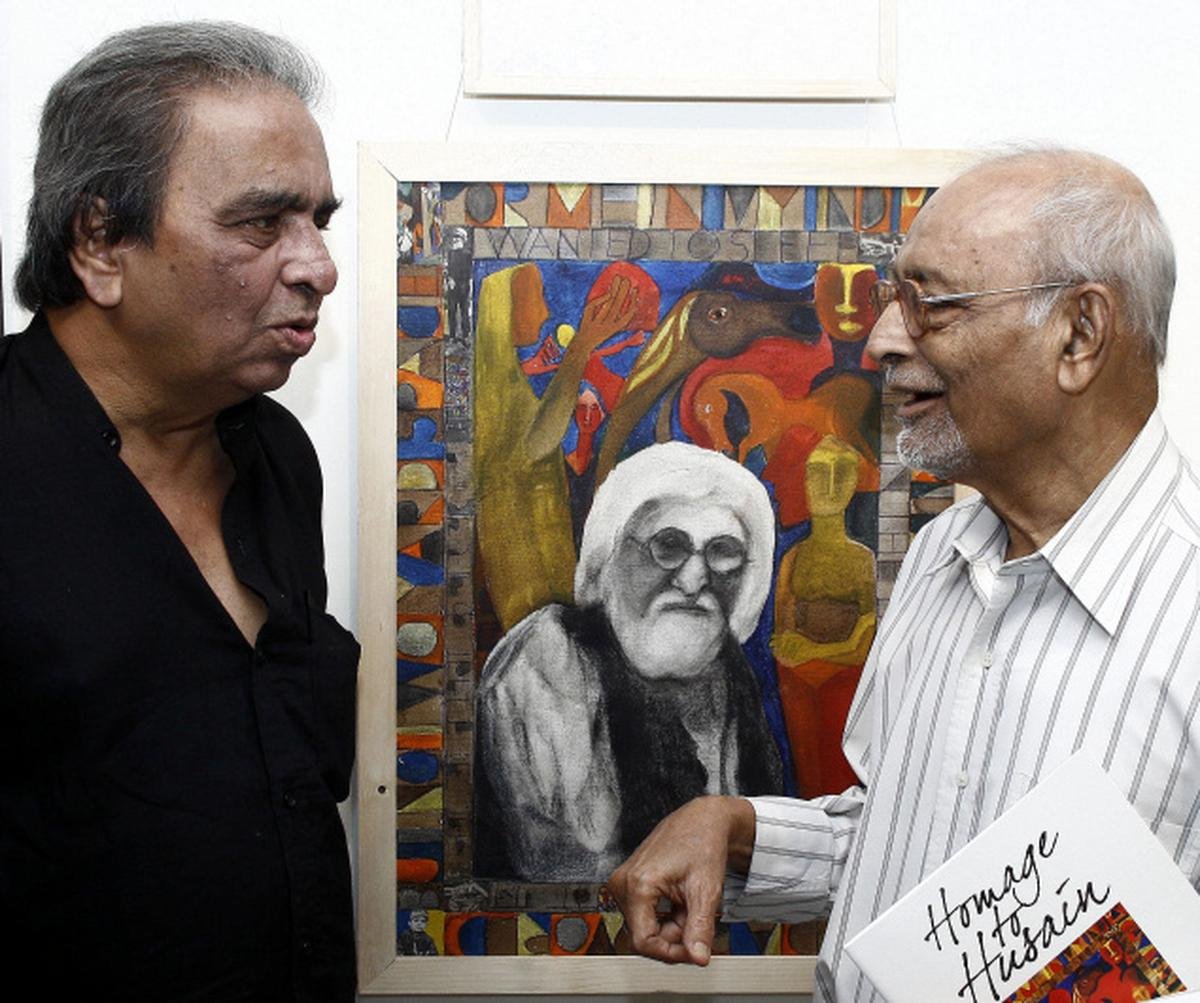
Shamshad Husain (born 1946, Mumbai) emerged as a significant voice in post-Independence Indian art, known for his restrained palette, introspective figurative compositions, and commitment to structural clarity and psychological depth. Born into an artistic milieu as the son of M. F. Husain, he received his formal training at the Faculty of Fine Arts, Maharaja Sayajirao University, Baroda, where an atmosphere of experimentation and mentorship shaped his early visual language. He later studied at the Royal College of Art, London, an experience that broadened his engagement with international modernism while reinforcing his disciplined approach to figurative practice. Beginning with his first solo exhibition in 1968, Husain went on to hold over twenty-eight solo shows in India and abroad, alongside executing murals and sculptures for public spaces. His contributions were recognized with the National Award from the Lalit Kala Akademi in 1983 and a Government of India fellowship in the mid-1980s. Across painting, sculpture, and public commissions, his work consistently explored the human form and social existence through a rigorous yet deeply humane modernist vision.