

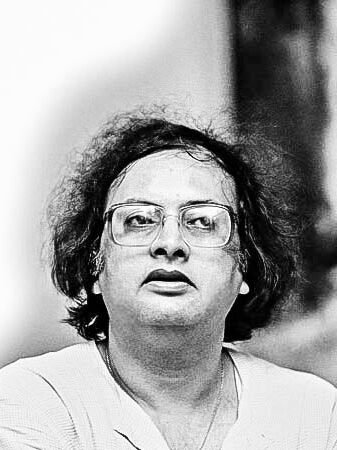
Bikash Bhattacharjee was one of the most significant figurative painters of post-Independence India, whose art was deeply rooted in the city of Kolkata, where he lived and worked throughout his life. Growing up in the post-Independence period, he witnessed the social and architectural transformations of the city, including the decline of affluent households and the conversion of grand North Kolkata mansions into shared, crowded living spaces. As a solitary teenager, he wandered through neighborhoods such as Shobhabazar, Bagbazar, Kumartuli, Jorasanko, and Chitpur, closely observing street life, architecture, and human interactions. These early encounters with narrow lanes, rooftops, and everyday urban scenes formed the visual and emotional foundation of his artistic language.
Trained in academic realism, Bhattacharjee developed a disciplined and meticulous approach to drawing and painting that remained central to his practice. At a time when Indian art was increasingly moving toward abstraction, he chose to remain committed to figuration, creating a powerful visual language that reflected urban life, psychological tension, and social realities. Alongside his studio practice, he taught at the Government College of Art, Kolkata, where he mentored generations of artists. Although a cerebral attack in 2000 brought his painting career to an end, his legacy continues through his students and his enduring contribution to Indian contemporary art.
Style and Themes
Bhattacharjee’s work is characterized by a restrained, photo-realistic technique combined with psychological intensity. His paintings often depict solitary figures, urban interiors, and cityscapes drawn from Kolkata’s backstreets. While rlgrounded in realism, his compositions carry surreal undertones, conveying themes of isolation, quiet tension, and social unease. His art reflects a deep engagement with the human condition, shaped by the changing social fabric of the city.
Exhibitions
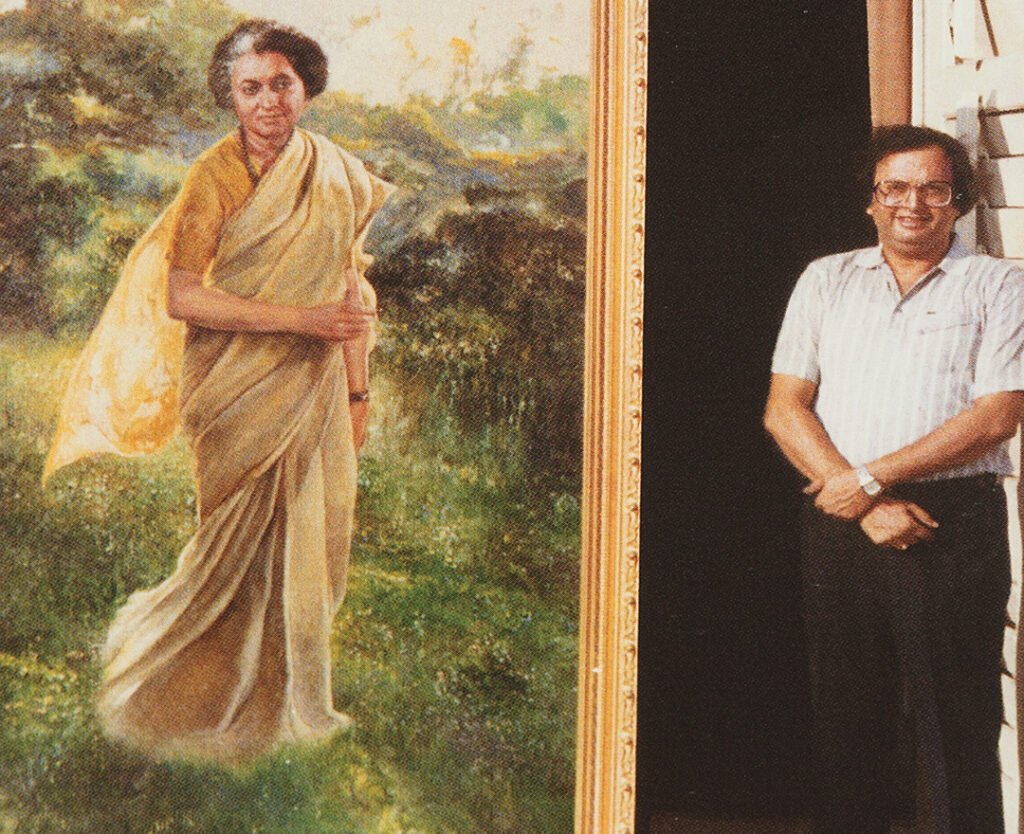
Bikash Bhattacharjee exhibited widely in India and internationally from the mid-1960s onward. He participated in major exhibitions such as the Paris Biennale (1968, 1969) and the International Triennale, New Delhi (1968, 1970–72, 1982), and showed across Europe including Yugoslavia, Romania, Czechoslovakia, and Hungary. His notable solo exhibitions included the Doll Series at Birla Academy of Art and Culture, Calcutta, and Kunika Chemould, New Delhi (1971), followed by shows at USIS, Calcutta; Gallery Chemould, Bombay; Dhoomimal Art Gallery, New Delhi; and Calcutta Art Gallery, New Delhi. His work was also featured in landmark exhibitions such as Twenty-Five Years of Indian Art (Lalit Kala Akademi) and the Festival of India, London.
Recognition and Legacy
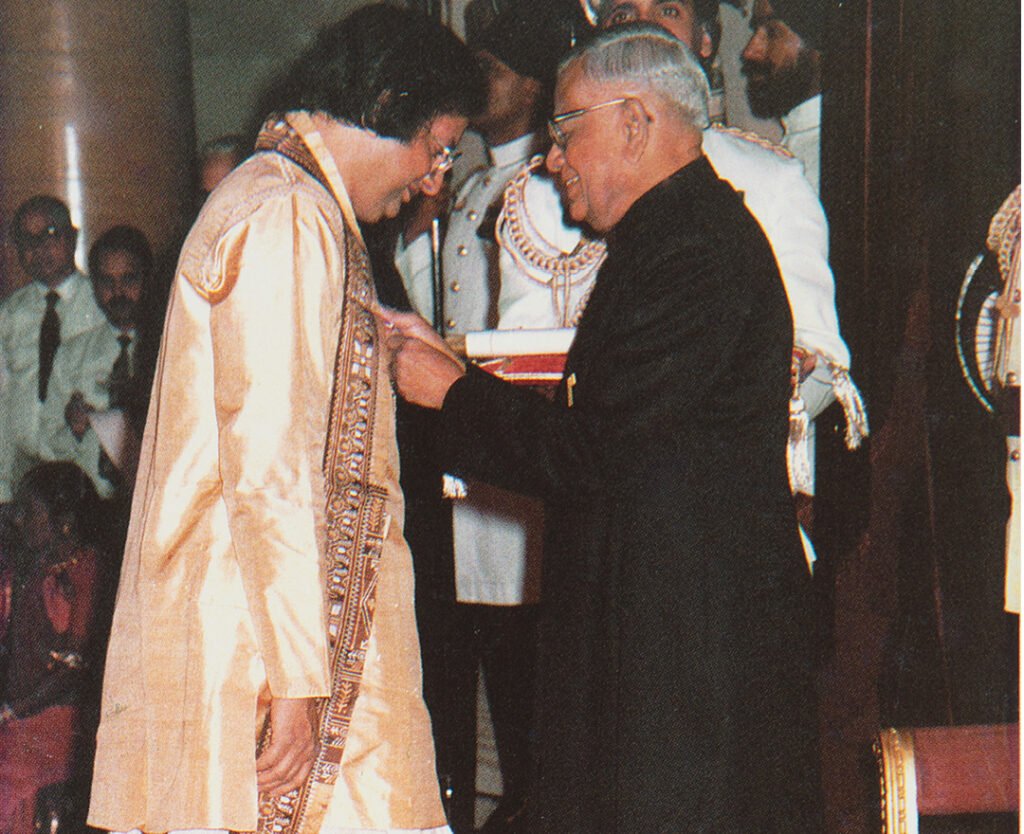
Bhattacharjee was among the first Indian artists whose works sold for significant sums, marking a shift in the valuation of contemporary Indian art. He was later honored as a Fellow of the Lalit Kala Akademi.
A cerebral attack in 2000 brought his painting practice to an abrupt halt, but his spirit remained undiminished. Even with a paralysed hand, he expressed his determination to paint again.