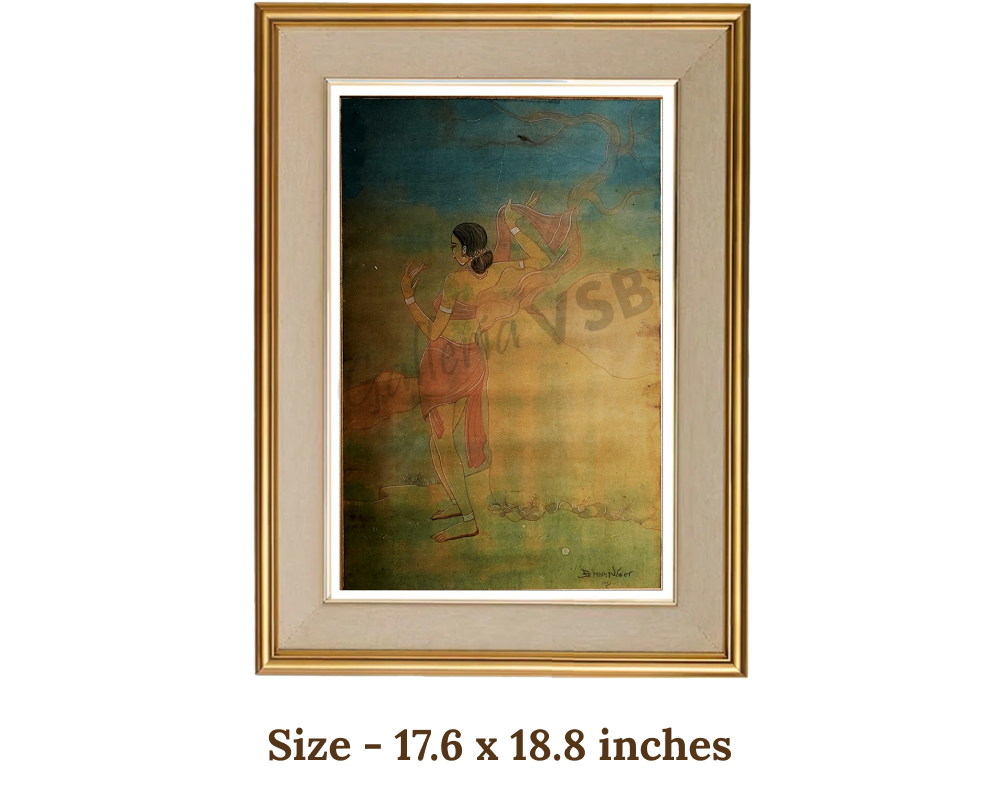
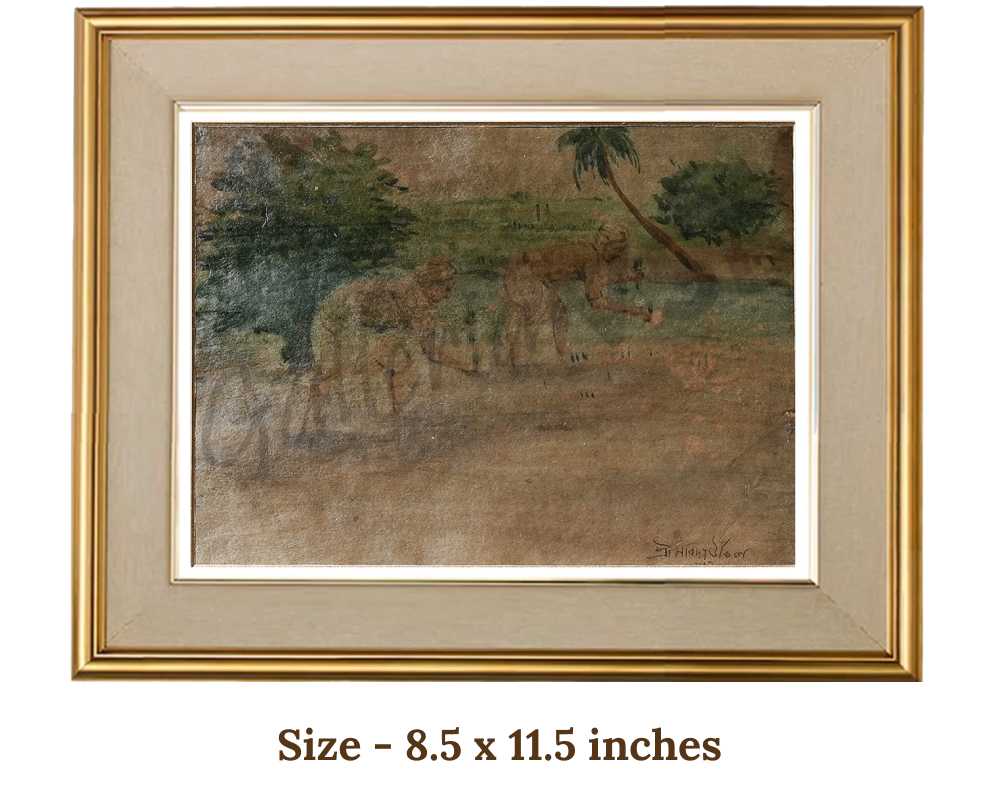
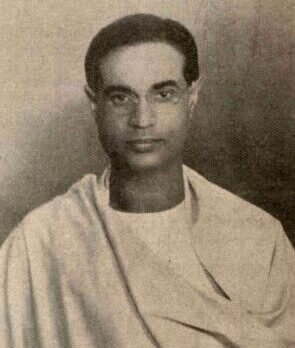
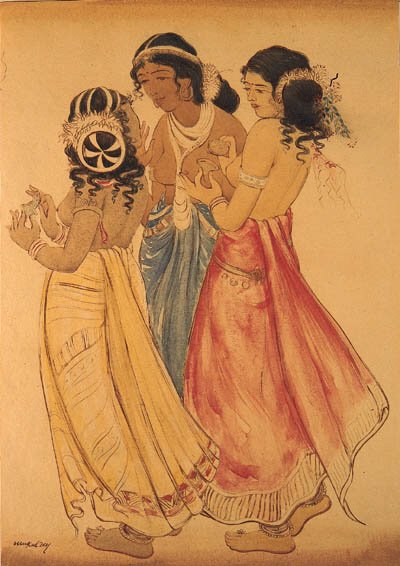
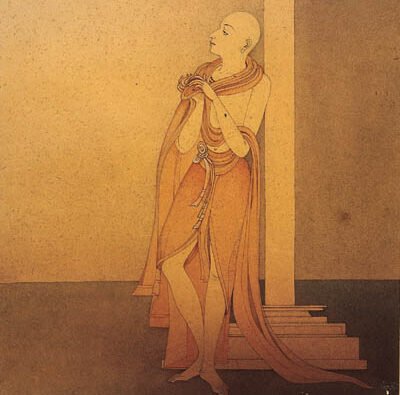
Sarada Charan Ukil (14 November 1888 – 21 July 1940) was an important early pioneer of the Bengal School of Art, recognized for bridging traditional Indian aesthetics with emerging modern sensibilities during a formative period of Indian art. Born in Bikrampur (then British India, now Bangladesh), he trained at the Government School of Art, Calcutta under Abanindranath Tagore, whose emphasis on indigenous techniques and cultural revival deeply shaped Ukil’s artistic philosophy and mastery of wash and narrative compositions rooted in mythological themes.
After moving to New Delhi in 1918, he became a committed educator—teaching at Modern School and later founding the Sarada Ukil School of Art on Janpath around 1926—while also contributing to institution building through the establishment of the All India Fine Arts and Crafts Society in 1928 alongside his brothers. Extending his cultural engagement beyond painting and pedagogy, Ukil appeared in the 1925 silent Indo-European film Prem Sanyas (The Light of Asia), directed by Franz Osten, portraying King Shuddhodhana, the father of the Buddha—an interdisciplinary role that enhanced the international presentation of Indian narratives and reflected his broader commitment to cultural expression across visual art, education, and cinema.