Galleria VSB

SHAMSHAD HUSAIN

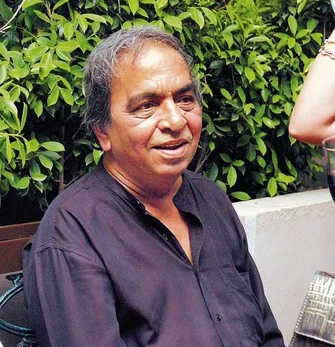
Shamshad Husain (born 1946, Mumbai) emerged as a significant voice in post-Independence Indian art, known for his restrained palette, introspective figurative compositions, and commitment to structural clarity and psychological depth. Born into an artistic milieu as the son of M. F. Husain, he received his formal training at the Faculty of Fine Arts, Maharaja Sayajirao University, Baroda, where an atmosphere of experimentation and mentorship shaped his early visual language. He later studied at the Royal College of Art, London, an experience that broadened his engagement with international modernism while reinforcing his disciplined approach to figurative practice. Beginning with his first solo exhibition in 1968, Husain went on to hold over twenty-eight solo shows in India and abroad, alongside executing murals and sculptures for public spaces. His contributions were recognized with the National Award from the Lalit Kala Akademi in 1983 and a Government of India fellowship in the mid-1980s. Across painting, sculpture, and public commissions, his work consistently explored the human form and social existence through a rigorous yet deeply humane modernist vision.


Style and Themes

Husain’s style is defined by a restrained, often muted palette and a focus on the human figure as central subject. His compositions emphasize structural clarity, surface flatness, and a contemplative stillness that mirrors inward reflection rather than external narrative.

Recurring themes in his paintings include the human condition, the tension between presence and absence, and the interplay of form and emptiness. These concerns situate his work within a thoughtful strand of Indian modernism that privileges psychological resonance over decorative flourish.

Exhibitions

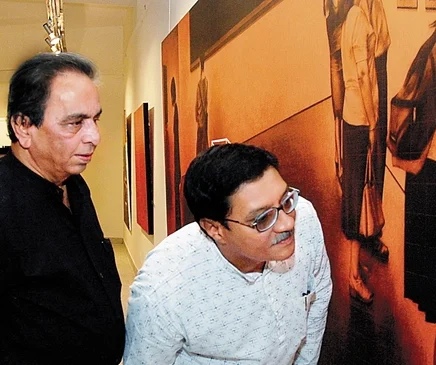
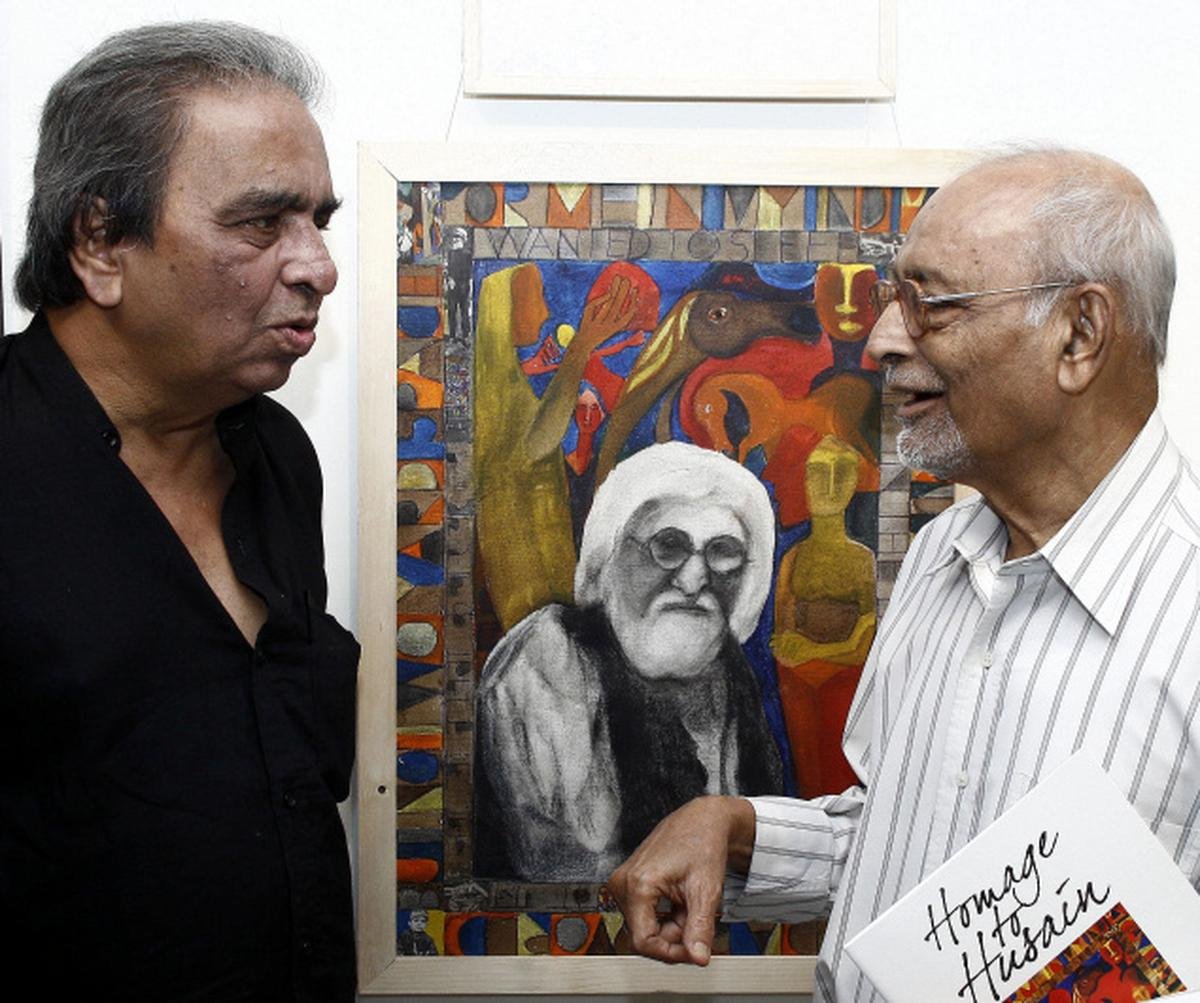
Husain’s works were shown extensively in India and abroad, with solo exhibitions in Bombay, Delhi, Baroda, Madras, Bangalore, Copenhagen, London, and Geneva. These presentations brought his disciplined figurative work to diverse audiences and placed him firmly within the narrative of Indian modern art.

His paintings continue to appear in major auctions and gallery listings, reflecting ongoing institutional and collector interest. Through these channels, his artistic legacy remains visible to contemporary audiences.

Enduring Impact and Legacy

Husain’s contribution to Indian art lies in his rigorous exploration of form and introspection. His disciplined approach to figurative painting set him apart from many of his contemporaries and continues to influence artists engaged with the human figure and existential themes.

Even after his death in 2015, his work circulates through exhibitions, auctions, and public collections, ensuring that his voice remains present in dialogues about 20th-century Indian art.